Avoiding Accountability: Fixing the Five Dysfunctions, Part 4
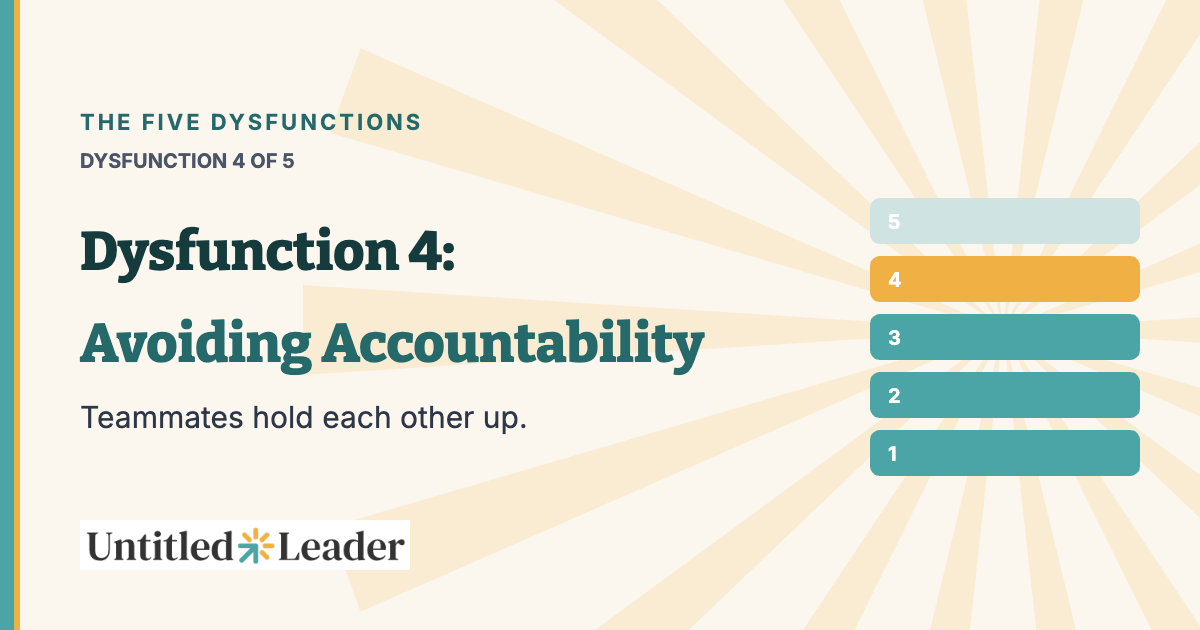
Quick answer: The fourth dysfunction is avoidance of accountability. Without real commitment, teammates hesitate to call each other out when someone isn’t meeting the standard. Lencioni argues that the most effective accountability comes from peers, not just from the coach or boss. Jump to the exercise.
This is dysfunction 4 of 5 in Fixing the Five Dysfunctions, our series applying Patrick Lencioni’s model to team captains and new team leads.
What Lencioni means
Lencioni notes that people avoid accountability because it’s uncomfortable and they don’t want to hurt relationships. But letting standards slide hurts relationships more over time, because it breeds resentment and lowers everyone’s performance.
On healthy teams, teammates feel responsible for each other’s behavior and performance. The leader’s job is to make peer accountability normal, not to be the only one enforcing standards.
What it looks like for a team captain
On a lacrosse team, one starter kept skipping lifts. Teammates grumbled but said nothing. Captain Owen talked to him privately and directly: “We agreed on this as a team. When you skip, it tells the younger guys it doesn’t matter.” He showed up the next morning. The team started holding each other to the standard without waiting for the coach.
What it looks like for a new team lead
Nadia’s team kept missing deadlines because one person was always late. Instead of handling it alone, she set up a weekly round where everyone shared progress on their commitments. Peer visibility did what reminders couldn’t.
How to build peer accountability
- Make standards clear and written. You can’t hold people to expectations they don’t know.
- Review progress publicly. Short weekly check-ins make commitments visible.
- Talk privately and early. Address small slips before they become big ones.
- Lead by example. Accept feedback yourself, gracefully.
- Recognize people who keep the standard. Accountability includes celebration.
Signs to watch for
- Everyone waits for the coach or boss to deal with problems.
- Resentment builds toward teammates who don’t pull their weight.
- Standards slide without anyone saying anything.
- Good performers feel frustrated or burn out.
Try this
The team effectiveness round (20 minutes, once a month).
- Each teammate writes, for every other teammate, one thing they do that helps the team and one thing they could do better.
- Go around the circle one person at a time. Teammates share both, kindly and specifically.
- The person receiving feedback only says “thank you.”
- Captains or leads go first in receiving feedback.
Say this
“I’m bringing this up because I care about you and the team. We agreed on a standard, and I need you with us on it.”
Talk about it
- Who usually holds people accountable on our team? Should that change?
- What makes it hard to call out a teammate?
- What standards matter most to us?
As an Amazon Associate, Untitled Leader earns from qualifying purchases. Some other links here are affiliate or referral links. They cost you nothing extra, and we only recommend what fits.
Go deeper
The Five Dysfunctions of a Team
Lencioni’s chapter on accountability explains why peer pressure, done well, beats top-down enforcement.
Also by Lencioni: The Ideal Team Player, on the humble, hungry and smart teammates who make healthy teams possible.
Fixing the Five Dysfunctions: Series intro · 1: Absence of Trust · 2: Fear of Conflict · 3: Lack of Commitment. Next: dysfunction 5: Ignoring Results.
Keep going
- Accountability skills for leaders
- What the experts say about giving feedback
- Free printable: Get the Five Dysfunctions Checklist (plus three more)
- Patrick Lencioni in our Expert Library
- Leading a team? Get the free First 30 Days starter kit
Leading a team?
Get the words for your next team conversation.
Free scripts and ten-minute exercises for new team leads, captains and student leaders.